

Compilation Nation: Times Square
Or, Enter the Movie Comp

Stats
Year: 1980
Country: U.S.
Genre: New Wave, Glam, Punk, etc.
Purchase
I’m anticipating your question and will answer it promptly. Yes, a movie soundtrack can be a compilation, that is, in the right circumstances. Personally, I believe that it counts as long as it is primarily composed of songs not written originally for the film; if original tracks are included, they cannot be part of the instrumental score, but songs of the typically pop structure in their own right. The movie comp, as I am now coining, comes from the type of film that forefronts music in its storytelling, using pop tracks to create a sense of time, place, and mood that is familiar to the audience. The soundtrack of this sort of film operates like a mixtape lovingly curated by the filmmaker, and the film operates like a string of music videos for the soundtrack, all connected by a common story.
The right movie comp is hard to find: very few good ones were ever pressed on vinyl, and some of the best ones are under-pressed and over-collected. I often fruitlessly comb through piles of instrumental-based soundtracks from the dustiest part of the record store hoping to find the right thing. Times Square (1980), thankfully, is one of the best movie comps around, and a pretty cheap find. I’ve seen multiple copies of the full-cover double LP gatefold come across my way, with most of them are priced under $10. This particular copy was found in the extensive film section of Bushwick Record Exchange, where I subsequently dropped my ID on accident due to over-excitement about the purchase.
Content
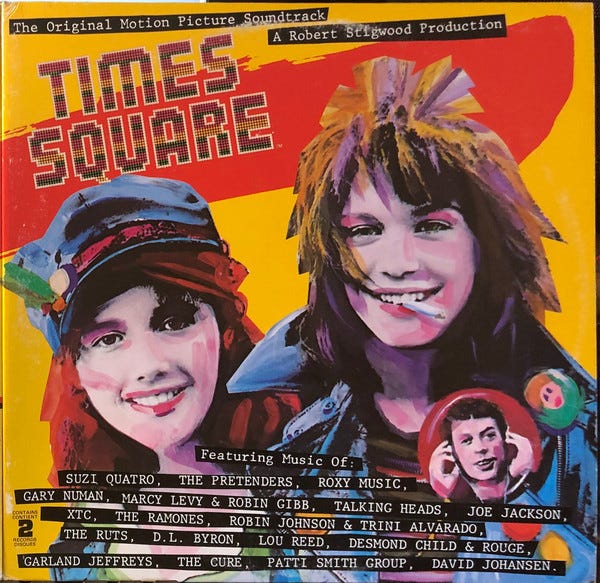
If you haven’t seen Times Square I implore you to check it out, especially if you’re a young woman from the tri-state area. The film follows Nicky and Pammy, two teenage girls from different walks of life who meet at a hospital while undergoing treatment for mental illness. The two escape, causing the distress of Pammy’s city official father and the interest of a hip radio DJ played by none other than Tim Curry. While the film wasn't very successful upon release- Roger Ebert only gave it two stars- the soundtrack proved to be a notable entry in the fast-changing music landscape of the early 80s. Outside of its connection to the film, the tracklist is special on its own; many of its songs were unreleased tracks, alternate recordings, or commissioned specifically for the movie. The extensive release did not come from the plans of director Allan Moyle, who intended to include more original songs in the movie, but from producer Robert Stigwood, founder of RSO, who believed the double album could mimic his previous success from Saturday Night Fever (1977). You can see Stigwood’s name featured prominently on the album cover, but not that of the filmmaker. While the edgy stylings of Times Square were never going to do disco numbers, the double LP hit 37 on the Billboard album sales chart and 56 on the Australian one, proving the album to be more successful than the film.
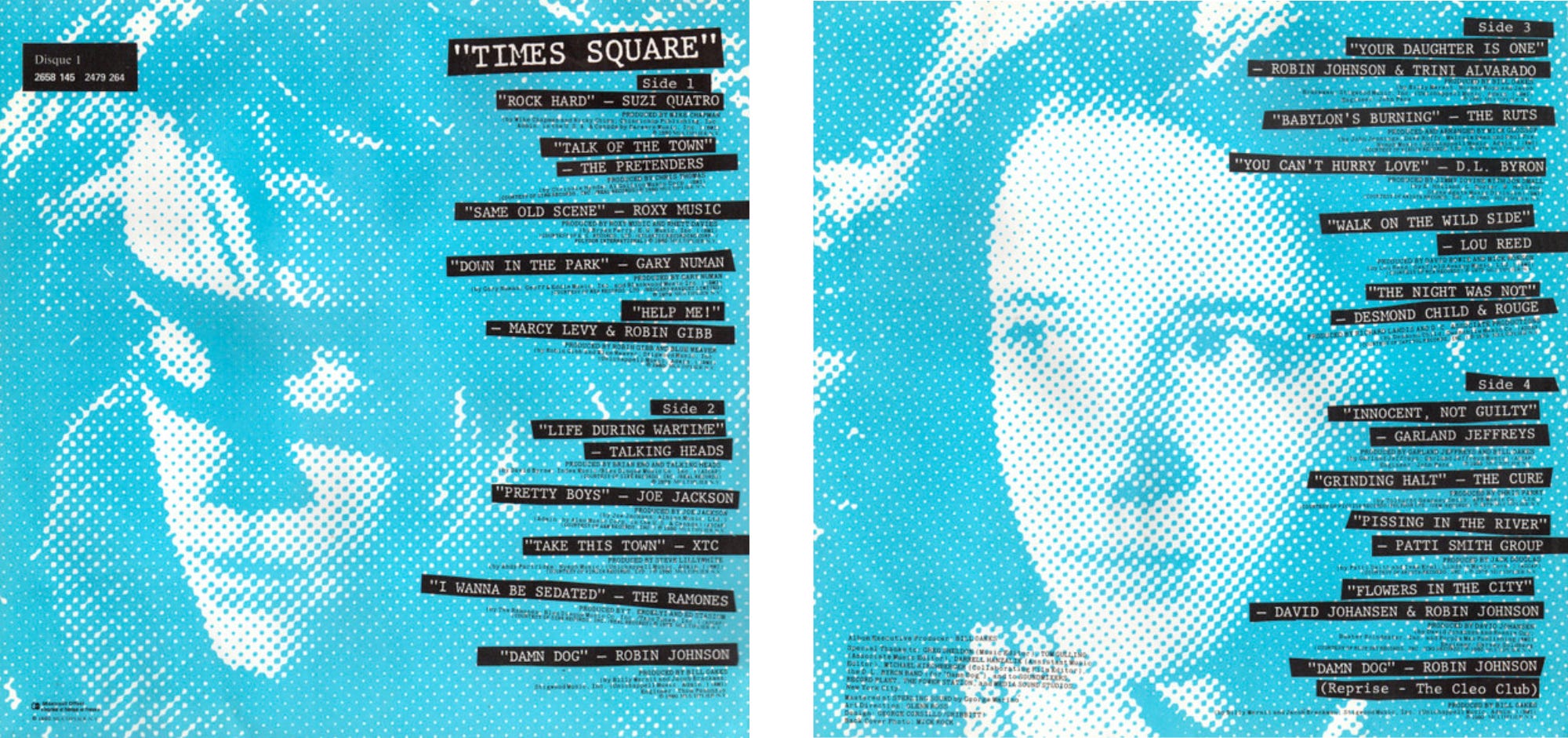
The first track, "Rock Hard” by Suzi Quatro, is noted in the movie as the favorite song of its protagonists. While “Rock Hard” may have the most cutting-edge sound with its straightforward notions of “rockin’,” it well encapsulates the taste of a disaffected girl in her early teens, still learning about the world around her but with a propensity towards rebellion. The other bastions of female-focused music featured include Chrissie Hynde with The Pretenders’ “Talk of the Town,” a personal favorite of mine, as well as Patti Smith’s "Pissing in the River.” The film’s original tracks, which I will cover below, feature the two protagonists on vocals, but the majority of the album’s songs come from male artists. For a film about girl power, I would hope its thesis would be stronger represented in its soundtrack, with so many phenomenal female-fronted bands in New York City at the time (Teenage Jesus and the Jerks? Bush Tetras? BLONDIE????)
The rest of the first side includes some better-than-usual Roxy Music as well as a Tubeway Army-era version of Gary Numan’s "Down in the Park." To round things out is the Robin Gibb original "Help Me!,” which sticks out like a pop-infected thumb amidst the album’s more alternative acts. The track was commissioned for the film, likely to inject more of that commercial Saturday Night Fever success that Gibb did with the Bee Gees. The song’s placement at the end of side A also proves a strange choice, as in the film it plays over the credits. I would have hoped that the comp would be organized in the same track order that the songs appear in the film as a way to to retain its storytelling elements, but for some unknown reason, Time Square retains no sense of linearity.
Side two is by far the strongest of the four. "Life During Wartime” is an impeccable Talking Heads cut to start with, made even better as it’s a different version than the one released on Fear of Music the prior year. Joe Jackson’s "Pretty Boys" brings some unexpected ska levity to the mix and "I Wanna Be Sedated” makes its essential appearance, as it serves as a plot point in the film and by 1980 was already a stone cold Ramones classic. Also featured is XTC’s "Take This Town,” another track written for the film, which according to Wikipedia made the album an essential for fans of the band who for many years couldn’t access the song elsewhere.
Finally is the best of the film’s in-universe songs, “Damn Dog” as performed by Robin Johnson. Although incredibly repetitive— it’s a punk song after all— Johnson’s aggressive performance commands attention. At only sixteen years of age when the film was released, it’s a shame she never further pursued a music career. You can once again put the blame there on RSO, which kept Johnson under an exclusive contract with the plan to market her as "the female John Travolta.” The projects that RSO set for Johnson never came to fruition, forcing her to take work as a bank teller as she rode out her contract. It was clear the ills of Saturday Night Fever fever struck yet again, robbing us of such a promising young talent.
Side three begins with another in-universe track, not notable for its composition or performances but for its shockingly liberal use of slurs. While it’s clear the political message of “Your Daughter Is One” is to fight back against the use of such demeaning language, it hasn’t aged super well and I tend to skip it when listening. The rest of the side is largely unmemorable, other than the inclusion of Lou Reed’s “Walk on The Wild Side.” Although the song was released eight years prior to the film, it scores a particularly potent scene in which Pammy’s father finds her dancing to the track while working at a nightclub. The sight of the thirteen-year-old Pammy dressed as an adult woman is jarring, and the thematic and instrumental melancholy of the song suits the vision of premature adulthood and rebellion perfectly.
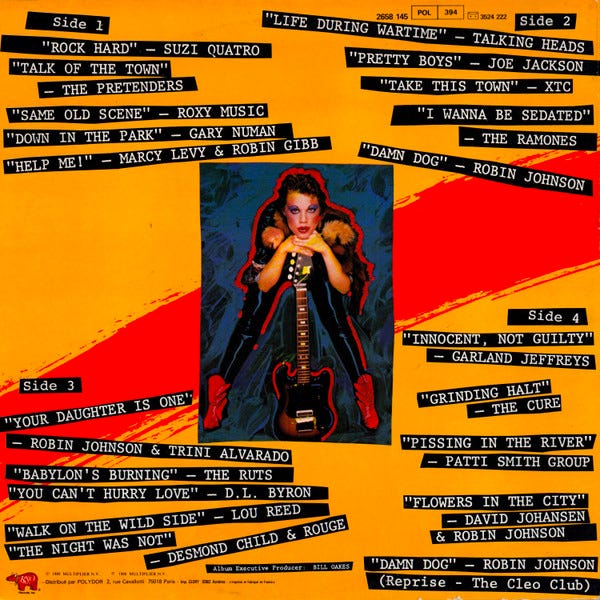
The final side features deep cuts from Garland Jeffreys and The Cure, as well as the aforementioned Patti Smith track before rounding out with more two originals. The David Johansen-led "Flowers of the City” could have been any New York Dolls b-side if it weren't for Robin Johnson’s minor additions. However the song truly puts into perspective the hold that the already bygone glam movement has on the film, from its art direction (peep Robin Johnson in full glam on the back cover) and the selections of the soundtrack. Last is a reprise version of “Damn Dog,” preformed as Nicky’s artistic debut at a sleazy nightclub in the film. The second version of the song feels unnecessary, especially since “Flowers of the City” would have been a better closer, but it is a good reminder of Johnson’s talents to cap things off.
Further Listening (or Watching)
RSO ended up pressing Times Square as a full color, printed-sleeve gatefold in over 20 countries, with some cassettes and 8-tracks to boot. And although the film wasn’t very successful, the accessibility of the album led to its discovery by many who were influenced by its message. Manic Street Preachers took many of its influences from the film, as Mathijs Peters writes in his book Popular Music, Critique and Manic Street Preachers:
(Nicky) Wire frequently adorned his face in a way similar to the bank-robber style make-up worn by one of the the protagonists and her fans in the 1980 film Times Square. Manic Street Preachers referred to this film as well by covering the song “Damn Dog” … and by printing a quote from the film in the same album’s sleeve booklet
And as an early feminist punk film to be marketed to mainstream audiences, it’s clear that the aesthetics and sound of the film went on to influence others. Think Ladies and Gentlemen, The Fabulous Stains(1982), Linda Linda Linda (2005), and We Are the Best!(2013). Bikini Kill frontwoman Kathleen Hanna even cites Times Square as one of her favorite movies, often suggesting it to her fans alongside Born In Flames (1983) and Out of the Blue (1980).
Was Times Square’s album ever going to be as successful as Saturday Night Fever’s? No. A million times no. This was never a film for the masses, but for the few it was for, the young grimmy glammy punks, it was there, and eventually it found its people.
Score
Variety: 2/5
Quality: 3/5
Cohesion: 2/5
Creativity: 3/5
Final Score: 10/20